
"coffee in China"
21000 article(s) found
Analysis of China Coffee Consumption Market in 2015
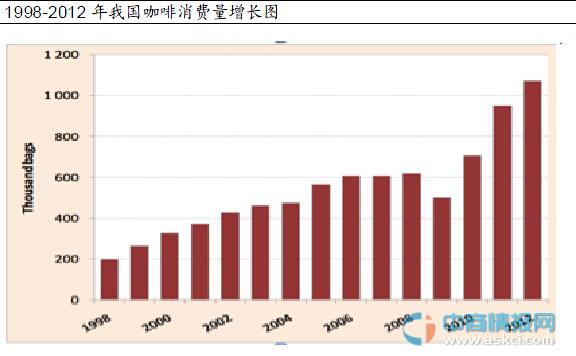
1. Changes in coffee drinking volume and drinking structure in China: compound 13% growth, instant-ready to drink-fresh grinding From 1998 to 2012, coffee consumption in China increased from 199,000 bags to 1.1 million bags, with an annual growth rate of about 12.8%. China has a population of about 1.3 billion, and coffee consumption has risen from 9.6 grams to 47.6 grams, with an average annual growth rate of about 12.1%. If the growth rate of 12.8% is maintained, the deadline

The present situation and Development trend of China's Coffee Industry in 2019 _ the Development Prospect of Coffee Industry is really so Great
Professional coffee knowledge exchange more coffee bean information please follow Coffee Workshop (Wechat official account cafe_style) Coffee, as a traditional Western drink, has a long history and cultural heritage. The world consumes at least 400 billion cups of coffee every year, and the current annual global coffee consumption is about 10 million tons. Coffee is the first of the two largest drinks in the world, and it is also the number one except oil in the world.

Starbucks faces Challenge Multi-Coffee Brands compete for Chinese Market
Multi-coffee brands compete for the Chinese market Starbucks faces challenges Starbucks is always a brand with no lack of topics. Recently, there are media reports in the United States, a Chicago woman sued Starbucks for $5 million because there were too many ice cubes in cold drinks. The news drew attention to Starbucks, which was widely questioned about its high pricing in China. There is more in one drink.

Starbucks faces Challenge: multi-Coffee Brands compete for Chinese Market
Multi-coffee brands compete for the Chinese market Starbucks faces challenges Starbucks is always a brand with no lack of topics. Recently, there are media reports in the United States, a Chicago woman sued Starbucks for $5 million because there were too many ice cubes in cold drinks. The news drew attention to Starbucks, which was widely questioned about its high pricing in China. There is more in one drink.

Our association awarded Yunnan Pu'er the title of "Coffee Capital of China".
Yunnan Pu'er, the coffee capital of China, has become a coffee production area with the largest planting area, the highest yield and the best quality in China and the main distribution center of coffee trade. On December 10, 2012, the Coffee Bean Branch of China Fruit Circulation Association named Pu'er the coffee capital of China. Chairman Zhang Jincheng read out the document that approved Pu'er to be named the Coffee Capital of China on January 7, 2013.

How Starbucks develops Starbucks Marketing Model in China Starbucks in China
If there is any company that should have failed in China, it is Starbucks. China has thousands of years of tea drinking history and strong tea culture. No one ever thought that Chinese people would drink coffee instead of tea. However, since landing in China 20 years ago, Starbucks has successfully opened more than 570 stores in 48 Chinese cities. With this momentum of development

Think deeply | Why does Starbucks have no strong competitors in China?
For professional baristas, follow the Coffee Workshop (Wechat official account cafe_style) Wanda is openly challenging Disney; Uber has invested 2 billion dollars against DiDi; Adidas has been fighting Li Ning and Anta for many years; and Apple is playing a game with many of China's emerging competitors (Huawei, oppo, etc.). One phenomenon always happens in China: a family

When was coffee introduced into China? when did coffee become popular in China?
The history of the introduction of coffee into China is not long, and it was not until 1884 that coffee was first planted in Taiwan Province. In the mainland of the motherland, the earliest coffee cultivation began in Yunnan. At the beginning of the 20th century, French missionaries brought the first batch of coffee saplings to Binchuan County, Yunnan Province, and began to grow coffee in the mainland. Chinese people have been drinking tea for thousands of years.

The coffee consumption market has great potential.
Following Kaiping (official Wechat account vdailycom) found that Beautiful Cafe opened a small shop of its own, and the three-day Fifth China International Coffee Exhibition ended at the China International Exhibition Center in Beijing. The reporter learned from the exhibition site that China's coffee consumption market has great potential and is mainly concentrated in the north, Shanghai, Guangzhou, Shenzhen and second-tier provincial capitals, but the coffee industry is still lacking.
How dependent are Starbucks and KFC on China?
Ambitious starbucks is expanding in china, but customers who don't stick around are a big obstacle to its expansion there, a report said wednesday. Customers love the stores so much that they sit for hour after hour and sometimes don't even buy a cup of coffee. In fact, despite their phenomenal expansion in China, these multinationals still account for only a fraction of their global sales in China.

The spread and Development of Coffee in China the Prospect of Coffee in China
The history of coffee introduced into China is not long, and it was not until 1884 that coffee was first planted in Taiwan. In the mainland, the earliest coffee cultivation began in Yunnan. At the beginning of the 20th century, French missionaries brought the first batch of coffee saplings to Binchuan County, Yunnan Province, and coffee began to be grown on the mainland. In terms of natural conditions, many parts of our country, Latin America, South America, India and India

A major breakthrough! Will Tims be lucky or Starbucks?
Despite the wave after wave of COVID-19 epidemic, China's catering industry has experienced the best parts and ups and downs in just a few years, which can not stop China's coffee market from becoming an important growth market for domestic and foreign coffee chains. In China's coffee market, various enterprises show their talents across the sea, in such a fierce competition.

Starbucks CEO is optimistic about China: the expansion of China's Coffee Market will continue for decades
Professional baristas follow coffee workshop (Wechat official account cafe_style) Starbucks believes that China's growing middle class and urbanization will increase the demand for coffee in this popular tea culture. China is Starbucks' biggest growth opportunity, and the expansion of the Chinese market is likely to continue for decades. This is Kevin John, CEO of Starbucks.

The first national competition in China's coffee industry! The 2018 National barista Competition opens in August!
Professional coffee knowledge exchange more coffee bean information please follow the coffee workshop (Wechat official account cafe_style) July 27,2018 by the all-China Federation of supply and Marketing Cooperation Vocational skills Evaluation and guidance Center, the Ministry of Human Resources and Social Security China Employment training and guidance Center, the China Business and Economic Association Coffee Branch hosted the 2018 China skills Competition the first national coffee

Fujian Postal oxygen Tea Evaluation official response to China Post selling milk tea shop milk tea shop is not postal business
On June 4, China Post made it to the hot search list of Weibo for the news of the establishment of a milk tea store. Interestingly, the next day # the official response to the establishment of a milk tea store by China Post # once again rushed to the list of hot searches on Weibo. Weibo list # China Post Milk Tea Store non-Postal Business # also generated 5.731 million readings. At first, a netizen revealed that the China Post Pharmacy, located in Fuzhou, Fujian Province, was new.
Chinese Coffee Chinese Coffee Culture China Coffee Network introduces when coffee was introduced into China?
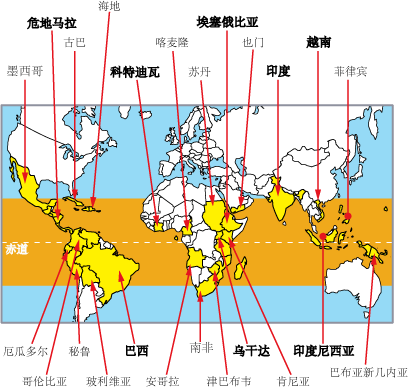
The history of the introduction of coffee into China is not long, and it was not until 1884 that coffee was first planted in Taiwan Province. In the mainland of the motherland, the earliest coffee cultivation began in Yunnan. At the beginning of the 20th century, French missionaries brought the first batch of coffee saplings to Binchuan County, Yunnan Province, and began to grow coffee in the mainland. The history of coffee introduced into China is not long, straight.

Coffee Industry develops Coffee Market consumption in China reaches 300 billion yuan
Wang Caihua, a senior research and management expert in China's coffee industry and deputy director of the coffee shop standardization promotion and management committee, said: according to relevant industry data, China's coffee market will continue to expand. China's coffee market will enter a period of rapid growth in the next 10 years, and its consumption is expected to reach 300 billion yuan by 2020. Wang Caihua believes that China's strong economy is real.

When was coffee introduced into China? Coffee growing in Taiwan Coffee Development in Yunnan and China
The history of the introduction of coffee into China is not long, and it was not until 1884 that coffee was first planted in Taiwan Province. In the mainland of the motherland, the earliest coffee cultivation began in Yunnan. At the beginning of the 20th century, French missionaries brought the first batch of coffee saplings to Binchuan County, Yunnan Province, and began to grow coffee in the mainland. Chinese people have been drinking tea for thousands of years.

Starbucks responds to China's profiteering: the price is 10 times the cost of materials
The price is nearly 10 times the cost of materials. Even the price of a mug made in China is nearly half more expensive than that in the United States. It is not just coffee that Starbucks sells MadeinChina mugs. After adding tariffs and transportation costs, the price in the United States is even cheaper than that in China. Miss Zhu, who traveled to the United States during National Day holiday.
Development of Coffee Culture in China
In the process of globalization, Western culture has also spread in China. Take coffee culture as an example. In the earliest days, drinking coffee was a western culture, but now it is already a global culture, but each region still has its own unique characteristics. Take espresso, for example, it has established its own brand and formed its own unique coffee culture in China.